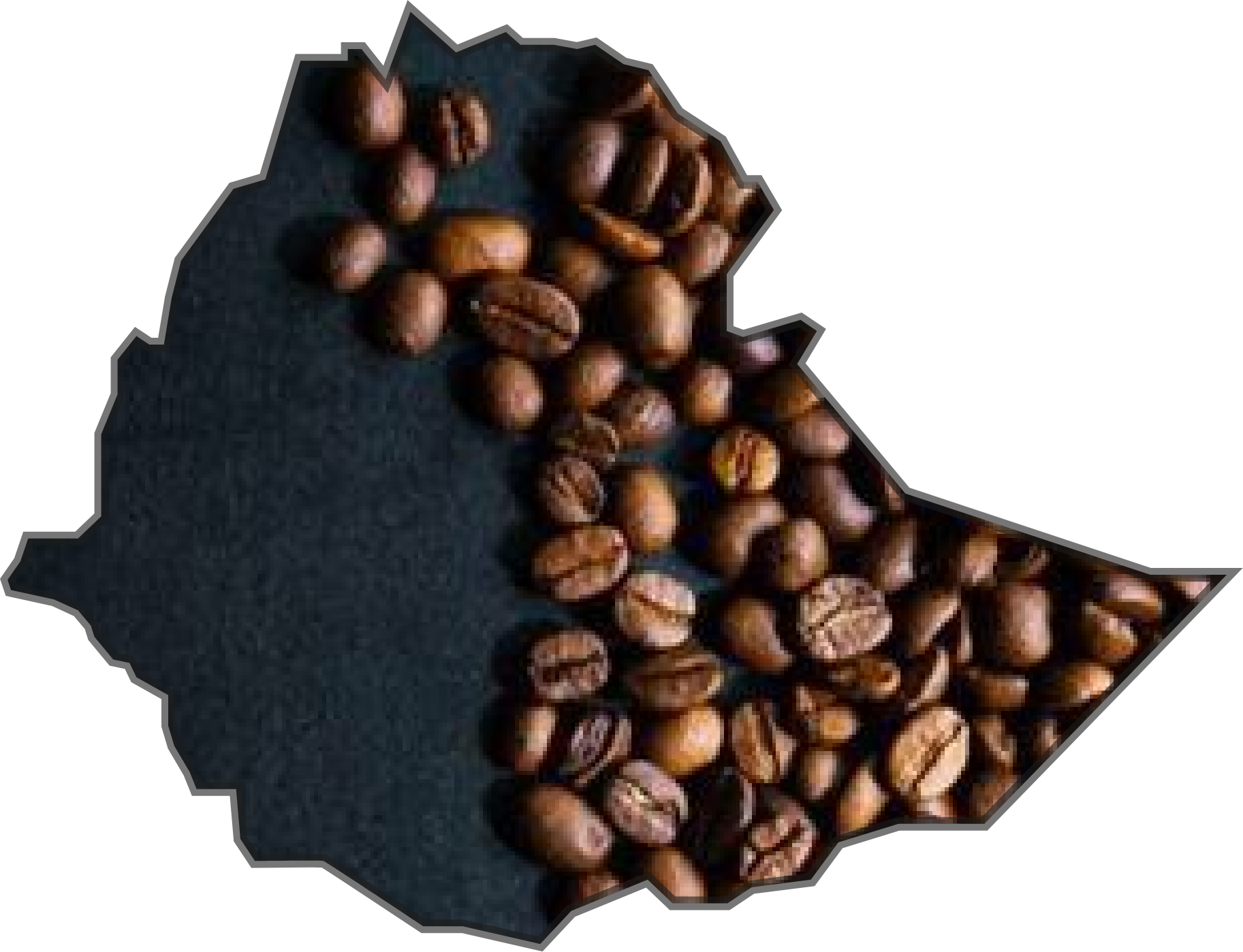
Coffee production in Ethiopia is a longstanding tradition which dates back dozens of centuries. Ethiopia is where Coffea arabica, the coffee plant, originates. The plant is now grown in various parts of the world; Ethiopia itself accounts for around 3% of the global coffee market. Coffee is important to the economy of Ethiopia; around 60% of foreign income comes from coffee, with an estimated 15 million of the population relying on some aspect of coffee production for their livelihood. In 2006, coffee exports brought in $350 million, equivalent to 34% of that year's total exports. Ethiopia is the world's seventh largest producer of coffee, and Africa's top producer, with 260,000 metric tonnes in 2006. Half of the coffee is consumed by Ethiopians, and the country leads the continent in domestic consumption. The major markets for Ethiopian coffee are the EU (about half of exports), East Asia (about a quarter) and North America. The total area used for coffee cultivation is estimated to be about 4,000 km2 (1,500 sq mi). The exact size is unknown due to the fragmented nature of the coffee farms. The way of production has not changed much, with nearly all work, cultivating and drying, still done by hand.
The revenues from coffee exports account for 10% of the annual government revenue, because of the large share the industry is given very high priority, but there are conscious efforts by the government to reduce the coffee industry's share of the GDP by increasing the manufacturing sector.
The Tea and Coffee Authority, part of the federal government, handles anything related to coffee and tea, such as fixing the price at which the washing stations buy coffee from the farmers. This is a legacy from a nationalization scheme set in action by the previous regime that turned over all the washing stations to farmers cooperatives. The domestic market is heavily regulated through licenses, with the goal of avoiding market concentration.